Tuesday, 3 February 2015

Audience Response

Audience response in terms of produced short film (however not quite finished) is very important for me. The judgement of the produced product is always necessary to make. I showed my finalised product to my friends. However, the feedback I got from them was different. 

I managed to create my short film in a way that audience give different responses. For the first part of my film, I have reduced the colours, so the film would seem a little darker in the beginning. More "black and white" colours made two parts of my film to contrast with each other. Furthermore, I managed this contrast visible through the atmosphere of sadness which the main actor is feeling, as he has to make a big decision to go to the past.   According to the audience, the mise-on-scene also played a big role in the extract. The idea of parallel locations of London and Moscow made the film more entertaining. In addition, the combining effect in the first part of the film is preparing audience to further development of the storyboard. 


Sound, according to feedback, also played an important role in throughout the film. Two dissimilar soundtracks in my film, created an effect of unexpectedness. As the first soundtrack was kind of dejected and glum, transfer to more optimistic tune made the audience more hopeful as well. I have asked the audience, of what they think about camera work. As I mainly used middle-shots throughout the film, the answer was expected. According to audience, more close-up shots, as well as far shots were needed in order to make the film visibly interesting. Later on I have put to use these advises, and filmed sequences which involved middle and far shots. 

The classification of my film is also very important aspect to consider. As the genre of my film is more romantic, I believe that audience should not be children. I think it would be good to adopt 16+ classification to my film, as the storyboard of it, does not necessarily suit the younger age audience

Sunday, 18 January 2015

The Creation of Music

The process of creation a music for my film involved a few technical issues. As the music cannot be copied (otherwise the copy right law would be broken) I had to create music all by myself. This process was not new to me, because during my AS production work I came across with the same problem. This time, however, was a little different from my AS experience. Because of the genre differences, A2 film required more thinking and planning in terms of the music. Furthermore, I had to create two pieces of music for my A2 work, because of the storyline. 

The programme that I used to create the music, was the same I used for AS so I was already familiar with "GarageBand". In my personal view, it is very useful and convenient programme to use, if you want to create your own music. The usefulness of "GarageBand" appear to be in the variety of different instruments that you can chose, in order to record your own track. Moreover, this handy programme, has already existing musical loops, which could be used straight away. In fact, I used those loops to create most of my track. Of course, it would have been much simpler to take already existing soundtrack, however, firstly copy- right law would be broken, and secondly, creating soundtrack by your own hands is very entertaining and enjoyable process.

After the track was recorded, it was necessary to transfer it to iTunes from GarageBand in order to transfer it even further to the programme I am using to edit my film "Final Cut Pro".  Even though it all seems complicated, in reality it is very easy process, especially if you have the necessary soft ware. From my experience, I can tell that the hardest thing in this whole process is actually choosing the right loops and notes to fit the genre of the film you are making. Additionally, the length of the soundtrack should not exceed the length of the video sequence, which that soundtrack belong to, otherwise, video will not match the sound.


Friday, 16 January 2015

New Rules for my Film

I reformulated the rules which were written before. The purpose of changing the rules were to make it a little simpler, so the audience will catch the idea quicker. So here are the new rules.

1. You can travel to the past but only by deleting your memories
2. You can only relive the past once.

Based on these rules, the 3rd rule is kind of "therefore" rule. However, it is necessary to include this rule, so the audience will refresh their minds.

3. You need one memory travel between past and present.

Wednesday, 14 January 2015

The Production Process (Moscow)

Filming the "Moscow" part of my short film was a little bit easier than the "London". Due to a good weather, it was very easy to film all the necessary parts of the film in Moscow. Even though, it was winter, it was not cold at all. However, despite the optimistic filming conditions, there were some minor issues, too.

The main actor is my friend. It is been my pleasure to work with him, as he was the best candidate. While handling camera work, I was given some instructions to the actors, as some of the shots was very difficult to make.  For example, we took three or four attempts to film the shot in the bridge near Red Square, because it was a lot of pedestrians passing near us. Additionally, it was all accompanied by a lot of vehicles. We had to wait until that "perfect" moment to actually finish filming in the bridge. 

Overall, I cannot tell that the production process in Moscow was hard. Compared to London, the Moscow part was much easier. In terms of skills, I obtained a lot of useful techniques of camera handling and examined the variety of different shots. Additionally, I would like to say thanks to my actors!

Monday, 12 January 2015

The Production Process (London)

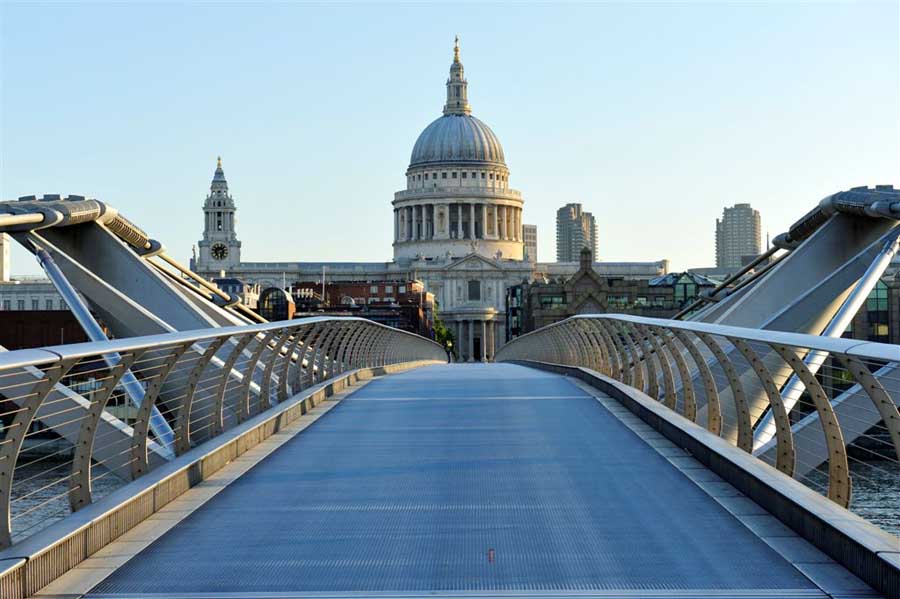
Filming in London was more difficult than filming in Moscow. We had to travel from one place to another, which made filming process a little long. Furthermore, while filming, a couple of issues have raised. When we came there, it was raining, therefore camera work was quite difficult to handle, as most of the filming occurred outside, for example in Millenium Bridge and Trafalgars Square. 
Additionally, in order to film at London Blackfriars, it was necessary to get a permit, which allowed us to film on that station. Of, course, we did not do it, and were able to successfully film there without this permit. 

On the other hand, such grey weather allowed me to experiment with some shots, which would not look very good when it is sun.Furthermore, bad weather successfully matched the atmosphere and genre of the film. Mise-en-scene, in my opinion,  at that day was quite good. In terms of props, it was easy, as not a lot was expected. In fact, this short film had a minimum amount of props on the screen, which made it easier to shot the scenes. Even though, it was not much to film, we have spend in London almost a full working day, as we had to travel from one place to another. The other interesting thing was filming in underground. Honestly saying, it was a little awkward to film there, as crowds were just staring at us all the way through.  However, there was a positive side in it, because I learnt how not to be disturbed, when a lot of people are looking at you.
Another difficulty which we faced, occurred on Trafalgars square, as it was not allowed to film there. We, of course, did not know it, but somehow managed to film all the necessary parts before the officer noticed us. 

It was very enjoyable and interesting process of going to London and filming there. Despite, all the difficulties, which we faced, the trip was very productive, as we managed to film all the necessary scenes in one go. Furthermore, I obtained a lot of experience in handling camera work, and managed to take some excellent shoots, despite the bad weather. 

Sunday, 11 January 2015

Filming Process ( Moscow)

The important part of a mise en scene analysis is not just identifying the components of the shot, but explaining the meaning or significance behind those components and connecting the shot to the themes of the film. As in the case with London, four locations were used in Moscow. The location is a key element for the feel of a scene. Thus, Red Square, the most recognizable place in Russia, was used as one of my locations. Furthermore, beautiful underground of Moscow was another famous location. 


The Moscow part of my movie looks quite similar, to the shots in London. The similarities are, perhaps, due to the same weather conditions. However, process of editing and the right music would give Moscow's part, happier mood and brighter atmosphere. The part I filmed in Russia, is meant to be the shining memories of the main actor. 

Filming Process (London)

For my A2 production work, it was necessary to film in London. The locations, in which the process of filming took place, were carefully chosen as parallel( mirroring) locations needed to be chosen in Moscow. For example, as I mentioned in my previous post, Trafalgar's square and Red square were one of those locations were I needed to film. 

Mise-en scene is a crucial part of my film, therefore, I had to make sure that the locations are the right once. Furthermore, the weather was just perfect for my story, and the misty atmosphere suited my storyboard. Here are some stills made in London:


As Mise en scene encompasses the most recognizable attributes of a film, choosing famous locations was definitely the right decision. Of, course I could just film in four random places, however, it would not be interesting for the existing audience and aftertaste of my film would be blur and unpleasant. Furthermore, in some instances, the mise-en- scene is designed to evoke emotions that permeate the whole movie. For those purposes, the atmosphere and feeling of sadness was crucial to exist in my film, as the story of my film tells it.