Thursday, 5 February 2015

"LEVIATHAN"

One of the most successful films in Russian cinematography, "Leviathan" was first released in Cannas on 23 May 2014. In Russia, however, the movie is going to be released on 5th February. Undoubtedly, this particular movie is worth to talk about, as it had won a lot of awards in many ceremonies. 

Andrey Zvyagintsev, the director, is known as one of Russia’s leading filmmakers, but his latest movie, “Leviathan,” has been especially successful. Prior to its nomination for the Academy Award, it won Best Screenplay at last year’s Cannes Film Festival, Best Film at the London Film Festival, a Golden Globe for Best Foreign-Language Film (the first Russian movie to win since 1969), and a few other awards.

List of Awards and Nominations
AwardCategoryRecipients and nomineesResult
2014 Cannes Film FestivalBest ScreenplayAndrey Zvyagintsev and Oleg NeginWon
Palme d'OrAndrey ZvyagintsevNominated
45th International Film Festival of IndiaGolden PeacockAndrey ZvyagintsevWon
International Art Festival of CinematographyBest CinematographerMikhail KrichmanWon
58th London Film FestivalBest FilmAndrey Zvyagintsev and Alexander RodnyanskyWon
68th British Academy Film AwardsBest Film Not in the English LanguageAndrey ZvyagintsevPending
32nd Munich Film FestivalBest FilmAndrey Zvyagintsev and Alexander RodnyanskyWon
8th Abu Dhabi Film FestivalBest Narrative
Best Actor
Andrey Zvyagintsev, Alexey SerebryakovWon
Palm Springs International Film FestivalBest Foreign Language FilmAndrey ZvyagintsevWon
Asia Pacific Screen AwardsBest Feature FilmAndrey ZvyagintsevWon
72nd Golden Globe AwardsBest Foreign Language FilmAndrey Zvyagintsev and Alexander RodnyanskyWon
13th Golden Eagle AwardBest Direction
Best Leading Actress
Best Film Editing
Best Supporting Actor
Andrey Zvyagintsev, Elena Lyadova, Anna Mann and Roman Madyanov Jr.Won
87th Academy AwardsBest Foreign Language FilmAndrey ZvyagintsevPending

Critics noted that the film’s corrupt officials work beneath pictures of Putin, and called “Leviathan” an “unremittingly poisonous portrait of the abuse of power in contemporary Russia.” However, the film faced other critiques. Sergey Markov, a political analyst and a Kremlin loyalist who has held several official positions, called it “an ideological justification for a genocide of the Russian people” and said that Zvyagintsev should block the release of his film in Russia and instead kneel in the Red Square and apologize to his compatriots.

Although 35% of Leviathan’s funding came from Russia’s Ministry of Culture, Vladimir Medinsky, Minister of Culture, acknowledged that the film showed talented moviemaking but said he does not like it. He sharply criticised its portrayal of ordinary Russians as vodka drinking and bribe taking which he does not recognise from his experience. He thought it strange that there is not a single positive character in the movie, implying that the director was not fond of Russians but rather “fame, red carpets and statuettes."

Tuesday, 3 February 2015

Global Media and Russian Cinematography 

Global media is very important to consider, as this topic may appear in the exam. I chose Russian cinematography for observation because Russian movies are not always bad. Furthermore, some of the movies such as "Nightwatch, Daywatch and Leviathan" made a big deal in Europe and even in America. I want to talk more about those movies and the impact it had on audience, as well as the interesting details which need to be mentioned.


Day Watch and the previously released  Night watch are superb films for Russian cinematography. Both titles have been blockbusters in Russia. 

The world of Night Watch is portrayed in a strange and familiar mixture of "Blade" and "The Matrix." Modern day Moscow is pictured as a dark, cold, unfriendly place. Lots of Matrix comparisons will be drawn simply due to the cinematography and costume design, but it’s all superficial stuff that’s now expected in any movie portraying a dark, dank reality.  One of the biggest problems with Night Watch, is that it leaves far too much unexplained. Sure it could all be excused by saying that it’s part of a planned trilogy( however, there was only two films) and that other aspects will be explained later. That’s fine if you are trying to create that is hard to understand  around something, like “What is the Matrix?”, but when the viewer is left sitting and not getting the idea of the movie, such as in the case of Night Watch, then the movie, perhaps, is not that good.

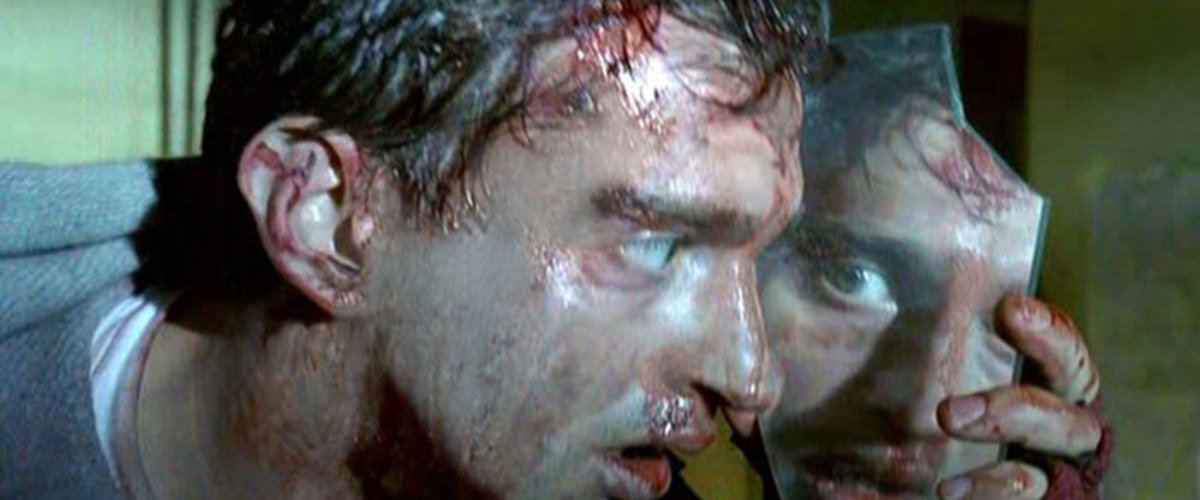
There are also things, which make the film interesting to observe. Though it only cost $4 million it does not look cheap, production values are high and visual effects used effectively. According to audience reviews, none of the performances disappoint. Konstantin Khabensky(the main actor) gives a good show as protagonist. There are also some cool smaller moments, as in a scene where Anton must use a mirror shard to fight with a vampire that can only be seen by his reflection. 

Vladimir Lechenski, (visual effects supervisor), in his interview said said: 

"Actually, we shot both movies together. Sometimes the action is in winter and sometimes in summer and we just combined our schedule. We then did post-production for Night Watch, and a year later we did post-production for Day Watch. And finished in January 2006. It got released in Russia and did essentially $34 million, the biggest ever for a movie in Russia, after Night Watch did $16 million, which was the previous record. Before that, the max was $3 million."


Audience Response

Audience response in terms of produced short film (however not quite finished) is very important for me. The judgement of the produced product is always necessary to make. I showed my finalised product to my friends. However, the feedback I got from them was different. 

I managed to create my short film in a way that audience give different responses. For the first part of my film, I have reduced the colours, so the film would seem a little darker in the beginning. More "black and white" colours made two parts of my film to contrast with each other. Furthermore, I managed this contrast visible through the atmosphere of sadness which the main actor is feeling, as he has to make a big decision to go to the past.   According to the audience, the mise-on-scene also played a big role in the extract. The idea of parallel locations of London and Moscow made the film more entertaining. In addition, the combining effect in the first part of the film is preparing audience to further development of the storyboard. 


Sound, according to feedback, also played an important role in throughout the film. Two dissimilar soundtracks in my film, created an effect of unexpectedness. As the first soundtrack was kind of dejected and glum, transfer to more optimistic tune made the audience more hopeful as well. I have asked the audience, of what they think about camera work. As I mainly used middle-shots throughout the film, the answer was expected. According to audience, more close-up shots, as well as far shots were needed in order to make the film visibly interesting. Later on I have put to use these advises, and filmed sequences which involved middle and far shots. 

The classification of my film is also very important aspect to consider. As the genre of my film is more romantic, I believe that audience should not be children. I think it would be good to adopt 16+ classification to my film, as the storyboard of it, does not necessarily suit the younger age audience