Tuesday, 10 March 2015

Promotion and Marketing - audience feedback

As my film was being promoted by Samsung, phones play a big role in marketing as well as promotion of my film. First of all, as the length of the film is not very long, only 5 minutes, it would be a good idea to distribute the film on Android tablets and smartphones. Distributing short film on gadgets, would significantly increase audiences' popularity among the genre. Marketing the film in smartphones' market, would significantly boost the chance of promoting film to global audience.

In addition, YouTube can be used to market my film.  Because of interconnectedness of mise-en-scene in my film (Moscow and London), putting it on YouTube will combine audience from both Russia and England. It would be also possible to collect some feedback through comments under the video in YouTube or by using other social media websites, such as facebook or VK(the russian version of facebook). Creating an opportunities, which allow to demonstrate a personal view, will significantly increase the chances of improving already existing products, especially ancillary once. For example, poster and magazine review.
Furthermore, hosting local festivals such as the WaterSprite one, is going to add even more popularity to the ancillary products. Additionally, a lot of people from my college have attended that festival. I have talked to a couple of these people, who have attended the festival. Here is what they said:

Here is what Artur (friend who has attended WaterSprite festival) has mentioned:
"  "

Eduardo (another friend who has attended WaterSprite festival) however said:
"   "

Saturday, 7 March 2015

WATERSPRITE Cambridge Film Festival 2015

For the purpose of getting an experience, and to see some of the short film, I have attended Watersprite Film Festival in Cambridge. This year Watersprite received submissions from 52 countries around the world. This made the competition stronger then ever. From Nepal to Switzerland, from Mexico to Russia, nominees have travelled from all over the world. I have only attended animation and fiction films that showed the impressive talents of the producers. It has been overwhelming to see how many people are willing to give up both time and effort to produce such amazing short films and animations.

After watching short films and animated cartoons, I have taken some photos.

The screening room was quite small, however there were quite a lot of people. The organisation was also good. Each person was given an audience response sheet, which was about rating film from the scale of 1(awful) to 5(amazing).
Personally, I have awarde 5 to every film I have seen in that festival, as I think the effort put to production of these films was absolutely amazing. Unfortunately, It was not possible to take videos in the screening room.
One of the film, I have watched, was named the"Warm Snow". It was an animated short film, produced in Israel. The surprising part was that it was fully in russian with english subtitles, therefore, this film was very interesting to watch, at least for me. The screenings were divided into two parts. The first one was called "With love" and the second part(which involved 3 animated and 1 documentary films) was called "Watching over"


"With love" explores the powerful, often turbulent, yet always touching dynamics of family relationships. On the other hand, "Watching Over" shines a light on the role of the guardians and protection in both fictional and real worlds.

This picture shows sponsors of Watersprite Cambridge Film Festivals. I think it is quite important to sponsor such film festivals, so more people would attend festivals like this.


I found it very interesting to observe how so-called stop-motion films are made. The effort for making those kind of animated films is incredible. In order to produce 20-30 second video, you have to work 15 minutes, in order to change the position of toys and take a shot of every changed position. There was a gathered crowd simply watching how stop-motion films are done.


The girl who makes stop-motion. Everytime she had to go and change the positions of toys which were made of plasticine. It took about 10 minutes to produce 20 sec video.


There are about 20 nominees from around the world, who received an award from Watersprite festival. This shows, how interconnected and interlinked the media had become, especially with the development of different technologies.


This map shows, where Watersprite film festivals took place.
I was very surprised to see Russia among the list of countries where the festival was held. As it is noticeable on the map, United States also was part of the festival. India was also one of the countries which held festival. One of the short-films I watched was Indian documentary about disabled girl, who was studying in the school, in order to financially provide her family in the future. I found it very interesting and not surprising of India's participation in film festival.


 Stop-motion has a premier position in the UK, with digital technologies evolving to give rise to a stop-motion renaissance, expanding its influence to media areas including commercials, TV series, feature films and SFX productions. Stop-motion techniques provide you with a diverse range of technical and creative skills. Knowledge of stop-motin as a communication tool will allow to understand the nature of new theories that have resulted from changes in technology

 I observed how stop-motion films are being made.


I have gained a lot of experience and understanding about the production of animated as well as short-films. It was a great film festival to attend as it involved production work from countries around the world. Furthermore, I watches stop-motion film being made, which was very interesting and entertaining activity.



Wednesday, 4 March 2015

Oscars 2015: The Best Animated Short Film nominees.

One of the most entertaining categories at the Academy Awards is for the Best Animated Short Subject.

Below are trailers for each of this year's nominees, as well as some behind-the-scenes videos showing how these talented artists used hand-drawn, stop-motion or computer animation to create memorable characters and fascinating narratives.

"The Bigger Picture"
Filmmakers: Daisy Jacobs and Christopher Hees
A "life size animated short," with painted characters and props in a room shot in stop-motion, shows the tensions between two brothers caring for their aging mother.


"The Dam Keeper"
Filmmakers: Robert Kondo and Dice Tsutsumi
A parable about bullying, featuring a young pig and his tentative friendship with an artistic fox new to his school.


"Feast" (WINNER)
Filmmakers: Patrick Osborne and Kristina Reed
A little dog's exhaustive menu changes as his master's romantic relationships change. What's a hungry pup to do?


An Oscar Winning film producer interview

Oscar short-film awards


Best live-action short film
WINNER: The Phone Call– Mat Kirkby, James Lucas
Aya – Oded Binnun, Mihal Brezis
Boogaloo and Graham – Michael Lennox, Ronan Blaney
Butter Lamp – Wei Hu, Julien Féret
Parvaneh – Talkhon Hamzavi, Stefan Eichenberger


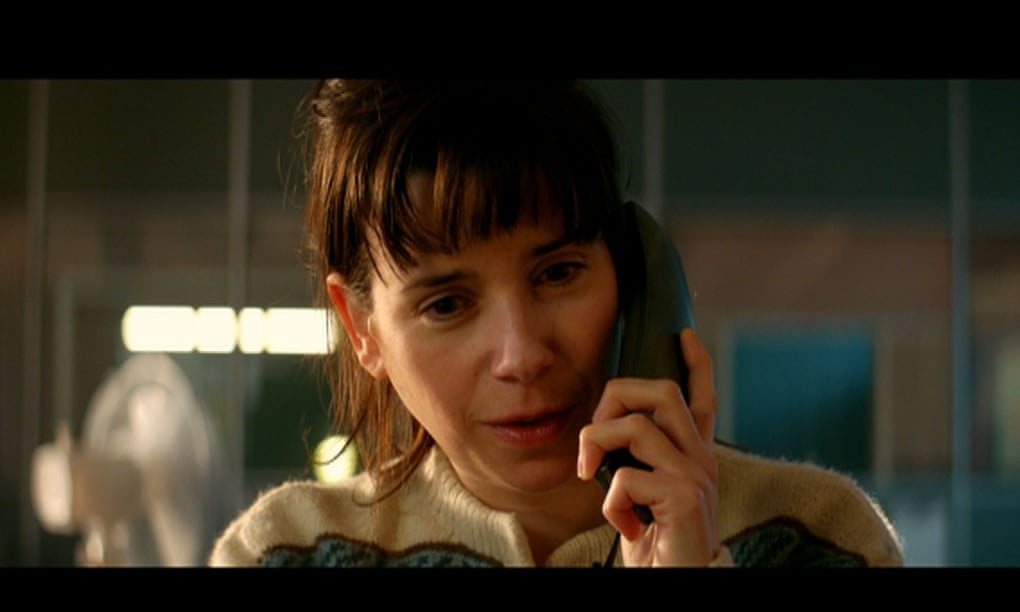
The live short action film, which is called "The Phone Call' won an oscar for the best live-action short  film. Mat Kirkby and James Lucas’s film tells the story of a woman working for a crisis centre phone help line who receives a call from a suicidal older man. It is an encounter that changes the lives of all of those involved in the call.


"Thanks to my crew, who all give their time for free. Short films are made not with money. They’re made with tenacity and lots of favours. Impossible to do it without them," said Mr Kirkby.
Before the Oscars’ glory, the film had earned plaudits from the Tribcea Film Festival and the Seattle Film Festival.

Please follow the LINK to know more about "The Phone Call" and to experience an oscar winning short film from the point of view of its producers.


Tuesday, 3 March 2015

Ancillary products

In addition to my short-film, it is also necessary to develop two ancillary products. These ancillary products include one magazine review and the poster for the film. For this reason, it would be necessary to search the web, and that is what I did. I found a lot of useful examples of posters, as well as magazine covers, which could be used to write a review in. Film, poster, and magazine review have to interlink with each other, as it will form the whole picture of an advanced portfolio process making.

Here are some decent examples, of already existing movies.


I have to be sure that my ancillary products will match the existing "label" of my film. According, to the examples above, the image has to be easily caught by the audience when they see it. Such big movies, like Harry Potter, or Iron Man, do not have very detailed posters, however have a big influence over audience. For example, who would not want to buy a magazine where Harry Potter simply looks inside your eyes. Such a powerful advertising seem to be very simple if you look at it closely. Therefore, I would want my ancillary products to not look too complicated.

Thursday, 5 February 2015

"LEVIATHAN"

One of the most successful films in Russian cinematography, "Leviathan" was first released in Cannas on 23 May 2014. In Russia, however, the movie is going to be released on 5th February. Undoubtedly, this particular movie is worth to talk about, as it had won a lot of awards in many ceremonies. 

Andrey Zvyagintsev, the director, is known as one of Russia’s leading filmmakers, but his latest movie, “Leviathan,” has been especially successful. Prior to its nomination for the Academy Award, it won Best Screenplay at last year’s Cannes Film Festival, Best Film at the London Film Festival, a Golden Globe for Best Foreign-Language Film (the first Russian movie to win since 1969), and a few other awards.

List of Awards and Nominations
AwardCategoryRecipients and nomineesResult
2014 Cannes Film FestivalBest ScreenplayAndrey Zvyagintsev and Oleg NeginWon
Palme d'OrAndrey ZvyagintsevNominated
45th International Film Festival of IndiaGolden PeacockAndrey ZvyagintsevWon
International Art Festival of CinematographyBest CinematographerMikhail KrichmanWon
58th London Film FestivalBest FilmAndrey Zvyagintsev and Alexander RodnyanskyWon
68th British Academy Film AwardsBest Film Not in the English LanguageAndrey ZvyagintsevPending
32nd Munich Film FestivalBest FilmAndrey Zvyagintsev and Alexander RodnyanskyWon
8th Abu Dhabi Film FestivalBest Narrative
Best Actor
Andrey Zvyagintsev, Alexey SerebryakovWon
Palm Springs International Film FestivalBest Foreign Language FilmAndrey ZvyagintsevWon
Asia Pacific Screen AwardsBest Feature FilmAndrey ZvyagintsevWon
72nd Golden Globe AwardsBest Foreign Language FilmAndrey Zvyagintsev and Alexander RodnyanskyWon
13th Golden Eagle AwardBest Direction
Best Leading Actress
Best Film Editing
Best Supporting Actor
Andrey Zvyagintsev, Elena Lyadova, Anna Mann and Roman Madyanov Jr.Won
87th Academy AwardsBest Foreign Language FilmAndrey ZvyagintsevPending

Critics noted that the film’s corrupt officials work beneath pictures of Putin, and called “Leviathan” an “unremittingly poisonous portrait of the abuse of power in contemporary Russia.” However, the film faced other critiques. Sergey Markov, a political analyst and a Kremlin loyalist who has held several official positions, called it “an ideological justification for a genocide of the Russian people” and said that Zvyagintsev should block the release of his film in Russia and instead kneel in the Red Square and apologize to his compatriots.

Although 35% of Leviathan’s funding came from Russia’s Ministry of Culture, Vladimir Medinsky, Minister of Culture, acknowledged that the film showed talented moviemaking but said he does not like it. He sharply criticised its portrayal of ordinary Russians as vodka drinking and bribe taking which he does not recognise from his experience. He thought it strange that there is not a single positive character in the movie, implying that the director was not fond of Russians but rather “fame, red carpets and statuettes."

Tuesday, 3 February 2015

Global Media and Russian Cinematography 

Global media is very important to consider, as this topic may appear in the exam. I chose Russian cinematography for observation because Russian movies are not always bad. Furthermore, some of the movies such as "Nightwatch, Daywatch and Leviathan" made a big deal in Europe and even in America. I want to talk more about those movies and the impact it had on audience, as well as the interesting details which need to be mentioned.


Day Watch and the previously released  Night watch are superb films for Russian cinematography. Both titles have been blockbusters in Russia. 

The world of Night Watch is portrayed in a strange and familiar mixture of "Blade" and "The Matrix." Modern day Moscow is pictured as a dark, cold, unfriendly place. Lots of Matrix comparisons will be drawn simply due to the cinematography and costume design, but it’s all superficial stuff that’s now expected in any movie portraying a dark, dank reality.  One of the biggest problems with Night Watch, is that it leaves far too much unexplained. Sure it could all be excused by saying that it’s part of a planned trilogy( however, there was only two films) and that other aspects will be explained later. That’s fine if you are trying to create that is hard to understand  around something, like “What is the Matrix?”, but when the viewer is left sitting and not getting the idea of the movie, such as in the case of Night Watch, then the movie, perhaps, is not that good.

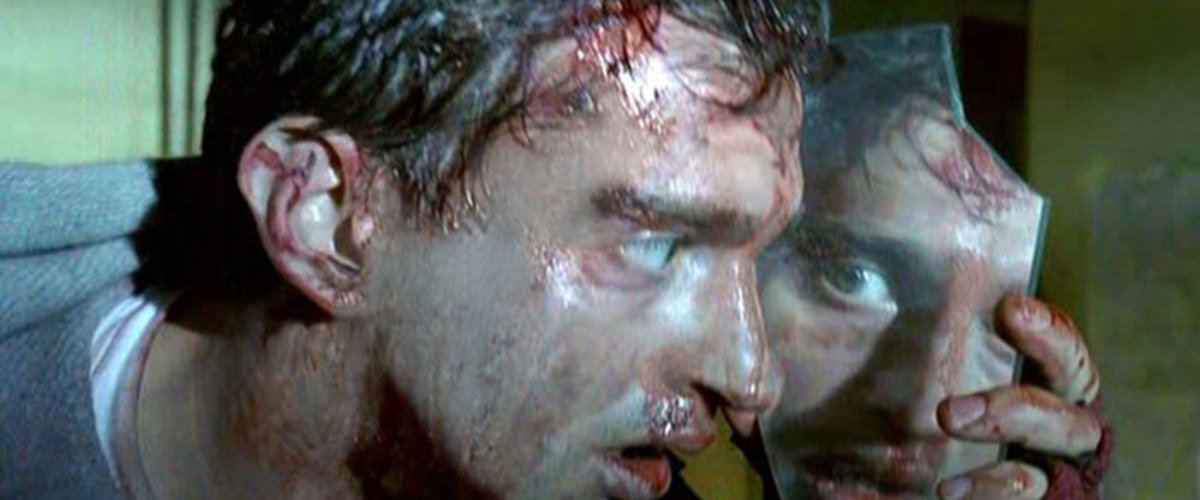
There are also things, which make the film interesting to observe. Though it only cost $4 million it does not look cheap, production values are high and visual effects used effectively. According to audience reviews, none of the performances disappoint. Konstantin Khabensky(the main actor) gives a good show as protagonist. There are also some cool smaller moments, as in a scene where Anton must use a mirror shard to fight with a vampire that can only be seen by his reflection. 

Vladimir Lechenski, (visual effects supervisor), in his interview said said: 

"Actually, we shot both movies together. Sometimes the action is in winter and sometimes in summer and we just combined our schedule. We then did post-production for Night Watch, and a year later we did post-production for Day Watch. And finished in January 2006. It got released in Russia and did essentially $34 million, the biggest ever for a movie in Russia, after Night Watch did $16 million, which was the previous record. Before that, the max was $3 million."