Monday, 12 January 2015

The Production Process (London)

Filming in London was more difficult than filming in Moscow. We had to travel from one place to another, which made filming process a little long. Furthermore, while filming, a couple of issues have raised. When we came there, it was raining, therefore camera work was quite difficult to handle, as most of the filming occurred outside, for example in Millenium Bridge and Trafalgars Square. 
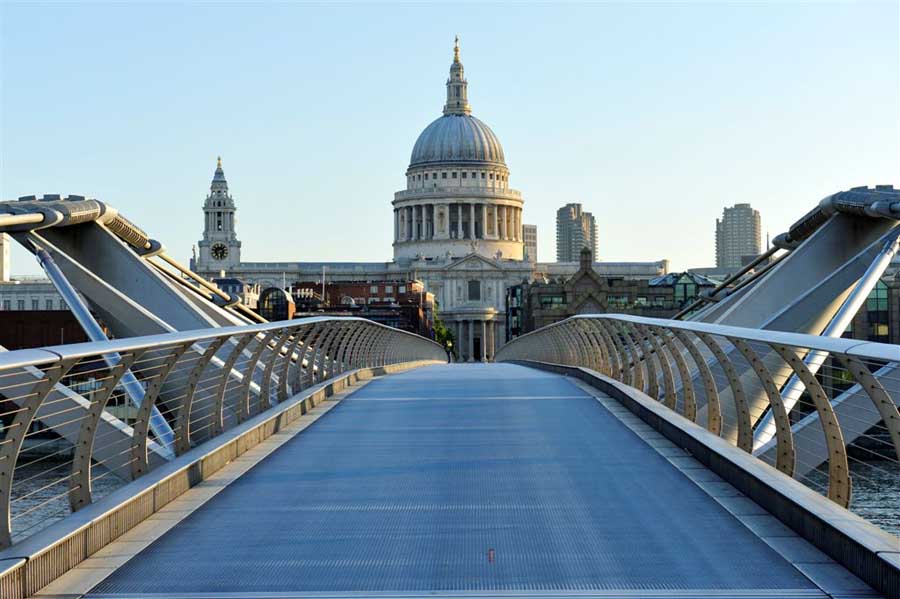
Additionally, in order to film at London Blackfriars, it was necessary to get a permit, which allowed us to film on that station. Of, course, we did not do it, and were able to successfully film there without this permit. 

On the other hand, such grey weather allowed me to experiment with some shots, which would not look very good when it is sun.Furthermore, bad weather successfully matched the atmosphere and genre of the film. Mise-en-scene, in my opinion,  at that day was quite good. In terms of props, it was easy, as not a lot was expected. In fact, this short film had a minimum amount of props on the screen, which made it easier to shot the scenes. Even though, it was not much to film, we have spend in London almost a full working day, as we had to travel from one place to another. The other interesting thing was filming in underground. Honestly saying, it was a little awkward to film there, as crowds were just staring at us all the way through.  However, there was a positive side in it, because I learnt how not to be disturbed, when a lot of people are looking at you.
Another difficulty which we faced, occurred on Trafalgars square, as it was not allowed to film there. We, of course, did not know it, but somehow managed to film all the necessary parts before the officer noticed us. 

It was very enjoyable and interesting process of going to London and filming there. Despite, all the difficulties, which we faced, the trip was very productive, as we managed to film all the necessary scenes in one go. Furthermore, I obtained a lot of experience in handling camera work, and managed to take some excellent shoots, despite the bad weather. 

Sunday, 11 January 2015

Filming Process ( Moscow)

The important part of a mise en scene analysis is not just identifying the components of the shot, but explaining the meaning or significance behind those components and connecting the shot to the themes of the film. As in the case with London, four locations were used in Moscow. The location is a key element for the feel of a scene. Thus, Red Square, the most recognizable place in Russia, was used as one of my locations. Furthermore, beautiful underground of Moscow was another famous location. 


The Moscow part of my movie looks quite similar, to the shots in London. The similarities are, perhaps, due to the same weather conditions. However, process of editing and the right music would give Moscow's part, happier mood and brighter atmosphere. The part I filmed in Russia, is meant to be the shining memories of the main actor. 

Filming Process (London)

For my A2 production work, it was necessary to film in London. The locations, in which the process of filming took place, were carefully chosen as parallel( mirroring) locations needed to be chosen in Moscow. For example, as I mentioned in my previous post, Trafalgar's square and Red square were one of those locations were I needed to film. 

Mise-en scene is a crucial part of my film, therefore, I had to make sure that the locations are the right once. Furthermore, the weather was just perfect for my story, and the misty atmosphere suited my storyboard. Here are some stills made in London:


As Mise en scene encompasses the most recognizable attributes of a film, choosing famous locations was definitely the right decision. Of, course I could just film in four random places, however, it would not be interesting for the existing audience and aftertaste of my film would be blur and unpleasant. Furthermore, in some instances, the mise-en- scene is designed to evoke emotions that permeate the whole movie. For those purposes, the atmosphere and feeling of sadness was crucial to exist in my film, as the story of my film tells it. 


Thursday, 27 November 2014

"Death Note" style rules

In my film I have decided to use the "Death Note" style rules which would appear in each scene, saying how the user must use the phone in order to time travel.
Rules would be the following:

1. You can relive the past by deleting the image.

2. You can only relive the past once.

3. You need one image to time travel.

Scenario


Scene 1

A guy is working in the laboratory. There are flashbacks reminding him about the car crash
-The Guy: I should not have let this happen (voiceover while working in the laboratory) This is all my fault. I spend 5 years creating this phone (looking at the phone) and it is the only opportunity to change everything. I loved her so much, but I could not even save her. I should have been with her. No, with this (picking up phone) I will change the past. Those 5 years were terrible, I could not sleep. Every time I tried to have a nap, I dreamed only of her… (Continuous working in the laboratory, images of the car accident appears in his head in the form of graphics design)
The first rule appears.

Scene 2

(There are four different locations, where the main actor is walking. Those locations are in London. Throughout the film, those locations are going to be paralleled with Moscow locations. For example, there would be a comparison between London and Moscow underground. There are images of each locations in his phone, as they are the memories.)

The guy is walking around London. He is alone with his thoughts. The world around seems blurred to him. The only thing he can think of is her. We crosscut between his wandering in the Black&White present and the full colour past, He looks at the phone that he has invented. The voice over begins
-The Guy: So this is it. I finally finished. Now I am able to see her. I will forget the exciting world and travel to the past just to see her. That smell of her hair, those big eyes, her skin, this is what I have been dreaming of over the last 5 years. (He continuous walking and holds a pause for a few seconds)
-Is this what I have been dreaming of? The cost of using that phone is too much. No it is not! I will be with her, and this is most important. But still, I understand that I will be stuck in the past, without the opportunity to go back. No, it is worth it. Life without her, is not a life. (He looks at the phone, and opens a photo)
-So this is it. If I press it, I will be in the past. With her. (Thinks for a few seconds and presses on the photo.)

Scene3

The guy appears in the past. He and his girlfriend talk, but only he knows what is going to happen. He listens to her, and simply looks at her. He understands that he is not going anywhere from her.
-The guy: I love you, and my desire is to be with you until the date of my death.
-The girl: What are you talking about, you sound so pessimistic
-The guy: I just want you to know that I am never going to leave you.
-The girl: OK THEN MAYBE YOU SHOULD DRIVE. (gives keys for the car)

The guy looks at the photo, thinking whether to delete the photo or not. (This would involve graphics design skills)

History of "Death Note"

Death Note tops the manga list with its extraordinary story. The manga series is written by writer Tsugumi Ohba and manga artist Takeshi Obata. Light Yagami, a history of death note high school student is the main character who discovers a supernatural notebook, known as the "Death Note", dropped on Earth by a death God named Ryuk. Light attempts to rule the world using this supernatural notebook and detective "L" and his successors makes effort to stop him. The Death Note hold great power as it grants its user ability to kill anyone whose name they know, by writing the name in the notebook. The image of the face is created whose name is written on the notebook.

Death Note serialized in 108 chapters by Shueisha in Weekly Shonen Jump. With a total of 12 volumes, the series also published in special  format in Japan. Furthermore, the series was adapted into live-action films and was released in Japan. With a total of 37 episodes, the anime series aired in Japan from October 3,2006 to June 26,2007 developed by Madhouse and directed by Tetsuro Araki. 

A light novel based on the series, written by Nisio Isin, was released in Japan and various video games have been published by Konami for Nintendo DS. The manga gained worldwide popularity and hence was released at various places. Viz Media licensed the manga in North America published all the twelve volumes from the series. 

The plot and violence of the story has been praised but the series is banned in China. Parents had complains that their children had been altering their notebooks to resemble the supernatural Death Note. On April 30,2010, Variety magazine announced that Warner Bros. acquired the rights for the Death Note manga to be adapted into a live-acton movie in the US. and according to this Warner Bros. has hired screenwriters Vlas parlapanides and Charley to adapt the manga into a screenplay. The US-version of the live-action movie will not be similar to the Japanese Death Note live-action
trilogy.

According to IMDb the movie has been listed under pre-production with a tentative release date in 2011. 

Thursday, 13 November 2014

Independent film makers

Independent filmmakers have an growing presence on social media sites such as twitter, facebook, youtube, and various blogs.  This presence has resulted in a wealth of shared knowledge for filmmakers worldwide.  These sites have become a hub for the independent filmmaking community, and are a vital resource many young writers, directors, and producers alike. There are huge amount of blogs, where people share their thoughts about where you have to start when producing your own film. 

Last week I have attended an independent film with my media class, about the coal miner strike in England in 1984. I got very curios about how the independent film makers are producing their own masterpieces, such as the movie I have seen.
After the film ended, there was a conference with a woman who planned to create this film. She had mentioned a lot of things, which had to be done to create the film. The producers were getting their budget, by raising money. The plan was to raise 10000 pounds, however, the actual sum exceeded that amount. They mentioned to gather approximately 26000 pounds! It is almost three times more than they were planning to gather. 

However, to make an independent film, budget is not the only requirement. There are a set of norms, which you have to follow when creating an independent piece. For example, the genre of the film has to be specified. The film that I have watched was a documentary, therefore, it involved a lot of interviews with ex-coal miners, which gave their view about this strike in 1984. The actors, location, and props are also playing a big role in making an independent movie. Once again, I will compare these necessities with the film I have watched. It is much easier to film a documentary, than, for example, an expensive an action film. The production of a documentary may be started, by interviewing people, who might somehow contributed on a particular event, based on the story. 

Editing is another major feature of producing a film. Fortunately, are many editors out there that dream of working on a film. Just like yourself they too need additional work for their reel. If you are willing to put in the time you can find a decent editor that will either donate time to you or do an edit for a discounted rate. Similarly, without sound, the film is not a film. Sound Design involves adding in sounds and taking away sounds from your final movie track. This is done through adjusting the volume of the actors voices, adding in background noise, adding in sound effects and adding in a soundtrack. Sound design was effectively used in this film about the strike in 1984. Even though, it is a documentary, sound design team did an amazing job.